LECTROSONICS DCR822
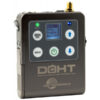
Lectrosonics DCR822 digital 2-channel portable receiver, 4x AA battery
€ 4,362.00 Excl. VAT
The DCR822 digital receiver provides the highest level of RF and audio performance available with a versatile feature set in a compact design for field and location production. Settings can be made from the front panel with tactile buttons and LCD interface, making the unit ideal for use in portable bag systems and on sound carts. An RF spectrum analyzer and SmartTune are built into the receiver to alleviate interference problems in an increasingly congested RF spectrum.
The mechanical design of the receiver fits into the same dimensions as the older UCR411A and combines field-proven features developed over many years of experience in motion picture and television production. To decrease weight, the DCR822 provides a dual channel receiver in one unit powered by 4 AA Lithium batteries or external DC. The receiver is also equipped with both an IR port and microSD card slot for data transfer. The machined aluminum housing and panels are surfaced with a hard-anodized finish with laser fetched markings to withstand the rigors of field production.
The RF gain stages in the front end use a newly developed design to provide low noise RF amplification, excellent sensitivity and extremely low susceptibility to intermodulation and de-sensitization.
An ideal diversity system constructively combines all the energy available at both antennas. Traditional “true diversity” or “ratio diversity” methods use two complete receivers and blend the audio. This works well for FM and Digital Hybrid systems, but falls short of the ideal for today’s all-digital modes. The DCR822’s Vector Diversity subsystem smoothly and continuously combines RF signals from two receiver front ends per channel, with differing phase angles in order to obtain maximum energy. Not only does this method deliver clean, artifact-free performance in all modes, it is actually able to take two signals compromised by multipath interference and reassemble them into a usable signal.
The DCR822 offers compatibility with the D Squared and Duet digital transmitters, including the DBu, DHu, DPr, DCHT, and M2T and backward compatibility with any Digital Hybrid Wireless transmitters including the SM and SMWB series, WM, HM Series, MM400 Series, HH Series, LT, LMb, UM400 Series and SSM.
With a noise floor at -120 dBV and a frequency response to 20 kHz, high frequency noise in the source audio is more apparent than in conventional wireless systems. The Smart NR algorithm has three mode. When OFF, no noise reduction is performed. When NORMAL is selected, enough noise reduction is applied to remove most of the hiss from the mic preamp and some of the hiss from lavaliere microphones. When FULL is selected, enough noise reduction is applied to remove most of the hiss from nearly any signal source of reasonable quality, assuming levels are set correctly at the transmitter.
The DCR822 can record received audio on a microSD card, in the industry standard .wav (BWF) file format, at 24 bits, 48 kHz for compatibility with any audio or video editing software.
FEATURES:
- dual independent channels, compact design
- vector diversity with 2 RF front ends per channel for superior performance
- 24 bit/48 kHz digital for flawless audio
- high IP3 performance of +15 dBm for tough RF environments
- analog and AES3 digital audio outputs
- 4 AA internal batteries or external DC powering options
- on-board recording via microSDHC card
| Category | Specification | Detail |
| RF & Wireless | Operating Frequencies |
Model A1/B1: 470.100-614.375 MHz | Model B1/C1: 537.600-691.175 MHz
|
| RF & Wireless | Frequency Selection Steps | 25 kHz |
| RF & Wireless | Frequency Stability | +/-0.001 % |
| RF & Wireless | Front End Bandwidth | +/-5.5 MHz, @ -3 dB |
| RF & Wireless | Sensitivity |
20 dB sinad 0.9 uV(-108 dBm), A weighted
|
| RF & Wireless | 60 dB Quieting | 1.12 uV (-105 dBm), A weighted |
| RF & Wireless | AM Rejection | >60 dB, 2 uV to 1 Volt |
| RF & Wireless | Modulation Acceptance | 85 kHz |
| RF & Wireless | Spurious Rejection | 85 dB |
| RF & Wireless | Third Order Intercept | +15 dBm |
| RF & Wireless | Diversity Method | Vector diversity |
| RF & Wireless | Antenna Inputs |
Dual SMA female jacks, 50 Ohm impedance
|
| Audio Performance | Frequency Response (Receiver) | 25 Hz to 20 kHz (+0/-3 dB) |
| Audio Performance | Input Dynamic Range (Overall) | 125 dB (with full Tx limiting) |
| Audio Performance | Overall Latency |
1.4 ms with digital source, <2.9 ms with Hybrid TX
|
| Audio Performance | Audio Test Tone | 1 KHz, -50 to +5 dBu, <1%THD |
| Audio Outputs | Audio Output |
Rear panel 2 TA3M connectors (can drive 600 Ohm, adjustable from -50 to +5 dBu in 1 dB steps into nominal 10 k bal. load)
|
| Internal Recording | Storage Media | microSDHC memory card |
| Internal Recording | File Format | .wav files (BWF) |
| Internal Recording | A/D Converter | 24-bit |
| Internal Recording | Sampling Rate | 48 kHz |
| Internal Recording | Recording Modes/Bit Rate |
24 bit-144 kbytes/s per channel (up to 4)
|
| Internal Recording | Recorder Audio Performance |
Freq response 25Hz to 20 kHz +0/-3 dB, dynamic range 110 dB (A) before limiting, distortion < 0.035%
|
| Interfaces & Controls | Front Panel Controls |
LCD display with menu/sel, pwr/back, up/down arrow buttons, SD Card Reader, IR Port
|
| Interfaces & Controls | Rear Panel Connectors |
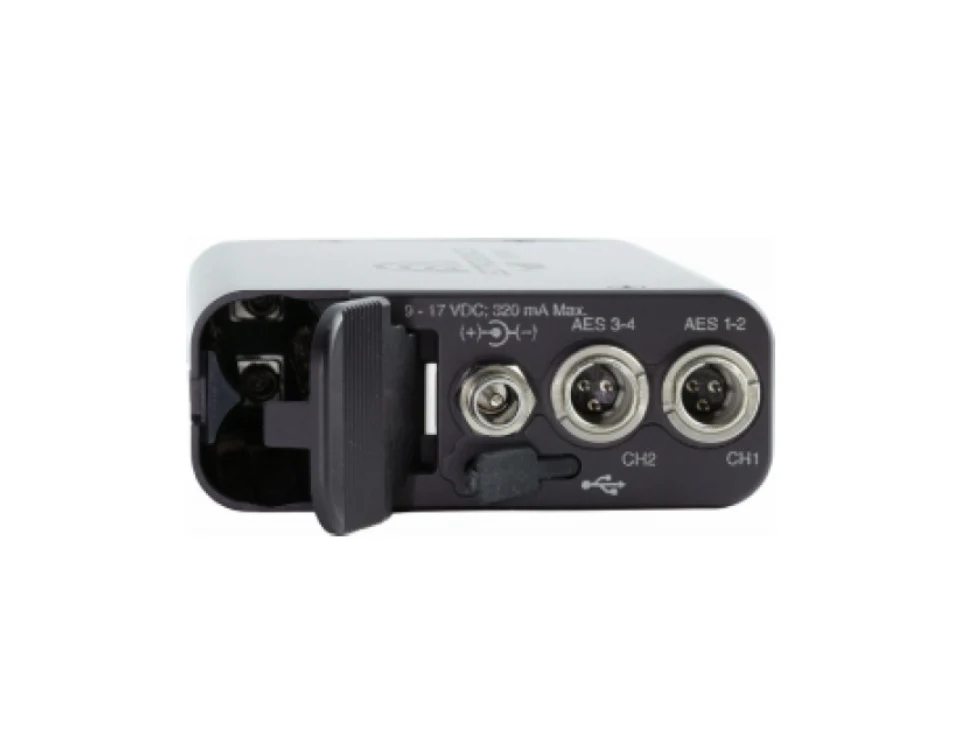
Analog/AES audio output jack, external DC input, battery compartment, USB port
|
| Power | External Power |
Minimum 9 Volts to maximum 17 VDC and 2.5 W, 170 mA at 12 VDC
|
| Power | Battery Life |
6 hrs continuous (w/4 disposable 1.5VDC AA Lithium batteries recommended)
|
| Physical | Environmental | Operating temperature: -20°C to 50°C |
| Physical | Dimensions (W x H x D) | 82.042 x 31.242 x 120.650 mm |
| Physical | Weight | 408 grams (with batteries) |
| Frequency | Block A1B1 – 470.100 to 614.375 MHz (ch 21 to 39), Block B1C1 – 537.600 to 691.175 MHz (ch 29 to 48) |
|---|
You may also like…
LECTROSONICS
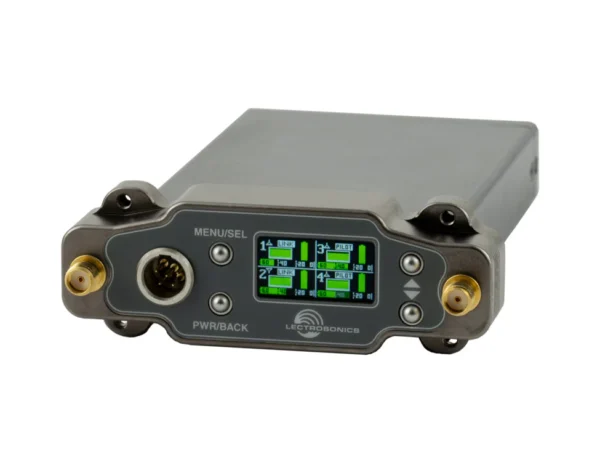
Lectrosonics DSR4 four channel digital slot-mount receiver, block A1-B1 470-614 MHz, rear panel adapter not included
This product has multiple variants. The options may be chosen on the product page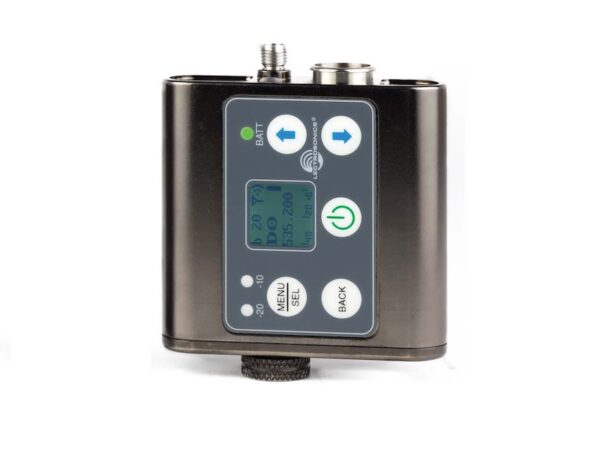
Lectrosonics belt pack transmitter / recorder, dual AA battery, incl. pouch, wideband
This product has multiple variants. The options may be chosen on the product page
LECTROSONICS
Lectrosonics belt pack transmitter, dual AA battery, fixed antenna, wideband
This product has multiple variants. The options may be chosen on the product page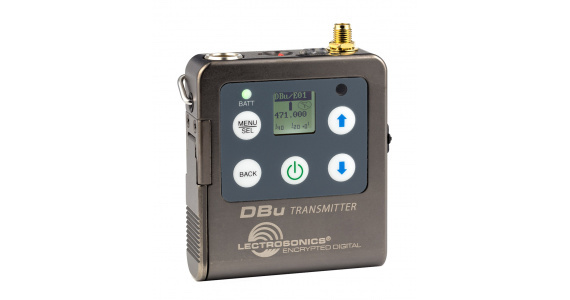
LECTROSONICS
Lectrosonics DBu digital belt pack transmitter with Lemo 3p connector, dual AA battery, 470-614 MHz
This product has multiple variants. The options may be chosen on the product page